Wheel Bet Cost Analysis
Horse Racing Wheel Bet Calculator: Every Formula and Cost Table You Need
Calculate every combination before you commit.
By Exotic Betting Analyst
 Available in US
I placed my first trifecta wheel at Newmarket nine years ago and immediately got the cost wrong. Not by a little – by a factor of three. I’d picked a strong key horse, wheeled it with the rest of the field in a 14-runner handicap, and only realised how many combinations I’d bought when the slip printed. That afternoon taught me something no tipster column ever mentioned: the maths behind exotic bet construction matters more than the selection itself.
Wheel bets remain one of the most powerful tools in UK horse racing, yet they trip up even experienced punters because the cost scales in ways that feel counterintuitive. Add one runner to a trifecta wheel and you don’t just add one more combination – you add dozens. With average Flat field sizes sitting at 8.90 runners across British racing, a full trifecta wheel on a typical card already generates 56 combinations at a £1 unit stake. Move to a Premier fixture where fields average 11.02 and that same wheel balloons to 90 combinations. The numbers shift fast, and getting them wrong means either overspending your session budget or, worse, leaving value on the table by wheeling too cautiously.
This guide is the resource I wished existed when I started breaking down exotic pools for a living. Every formula, every cost table, every strategic nuance – laid out with UK-specific terminology, UK Tote deduction rates, and real field-size data from the BHA. Whether you’re pricing your first forecast wheel or stress-testing a superfecta partial, the maths and the strategy sit side by side so you can move from understanding to action without switching tabs.
The UK Tote takes a 25% deduction from exotic pools – Exacta, Trifecta and Superfecta alike. That single number shapes every cost-versus-return decision you’ll make with wheel bets, and I’ll show you exactly how throughout this piece.
Table of Contents
- The Numbers Behind Every Wheel Bet Decision
- What Is a Wheel Bet in Horse Racing
- Wheel Bet Cost Formulas for UK Racing
- Wheel Bet Cost Tables by Field Size
- UK Tote Pool Deductions and Their Impact on Wheel Bets
- How Declining Field Sizes Affect Your Wheel Bet Cost
- Session Budgeting for Wheel Bets
- Wheel Bet vs Box Bet: Cost and Strategy Compared
- UK vs US Terminology: Forecast, Tricast and Their American Equivalents
- Frequently Asked Questions
The Numbers Behind Every Wheel Bet Decision
- Wheel bet cost is driven by permutations, not simple multiplication – a trifecta wheel in a 12-runner race generates 110 combinations at £1 unit stake, four times more than the same field’s exacta wheel.
- The 8-12 runner range delivers the best cost-to-dividend ratio for UK exotic pools, aligning with Premier Flat fixtures that average 11.02 runners.
- The UK Tote deducts 25% from all exotic pools before dividends are calculated – factor this into expected returns before committing to a full wheel.
- Declining field sizes (Flat 8.90, Jump 7.84 in 2025) reduce ticket costs but also thin the pools your wheel bets pay from.
- Part wheels save serious money: keying one horse and selecting 8 from 12 runners in a trifecta cuts your cost from £110 to £42.
What Is a Wheel Bet in Horse Racing
Picture this: you’re at Cheltenham, and you’re absolutely certain that one horse wins the third race. Not fairly confident – certain. But second and third place? You’ve got opinions, sure, but nothing you’d stake your mortgage on. A wheel bet lets you lock in that conviction for one finishing position and spread your coverage across every other contender for the remaining positions. It’s the exotic bet structure built specifically for punters who have a strong view on part of the result but not all of it.
In its simplest form, a wheel bet fixes one horse – called the key horse – in a specific position within a multi-position exotic wager, then pairs that horse with all or some of the remaining runners in the other positions. The Tote pools where wheels operate most naturally are the Exacta (picking first and second in correct order), the Trifecta (first three in order), and the Superfecta (first four in order). Each pool demands correct finishing order, which is precisely why wheels exist: they let you cover multiple order-dependent outcomes without manually constructing every individual combination.
Wheel bet – an exotic wager that fixes one or more selections (key horses) in specific finishing positions and pairs them with multiple runners in the remaining positions, generating a set of order-dependent combinations automatically.
The concept transfers directly from pari-mutuel racing worldwide, but in British racing the terminology carries its own flavour. What Americans call an exacta, UK punters know as a forecast. The trifecta becomes a tricast. The underlying mechanics are identical – you’re betting into a shared pool where all stakes are collected, the operator deducts a commission, and the remainder is divided among winning ticket holders. The Jockey Club put it neatly: the Tote works like a lottery, where punters pick their horses, put money into a cumulative pool, and everyone with a winning ticket shares a percentage of the pot.
Wheel bets are available on any UK race where the relevant Tote pool operates. The Exacta requires a minimum of two runners; the Trifecta requires at least three declared runners (though pools become meaningful with larger fields); the Superfecta typically needs eight or more runners to generate a viable pool.
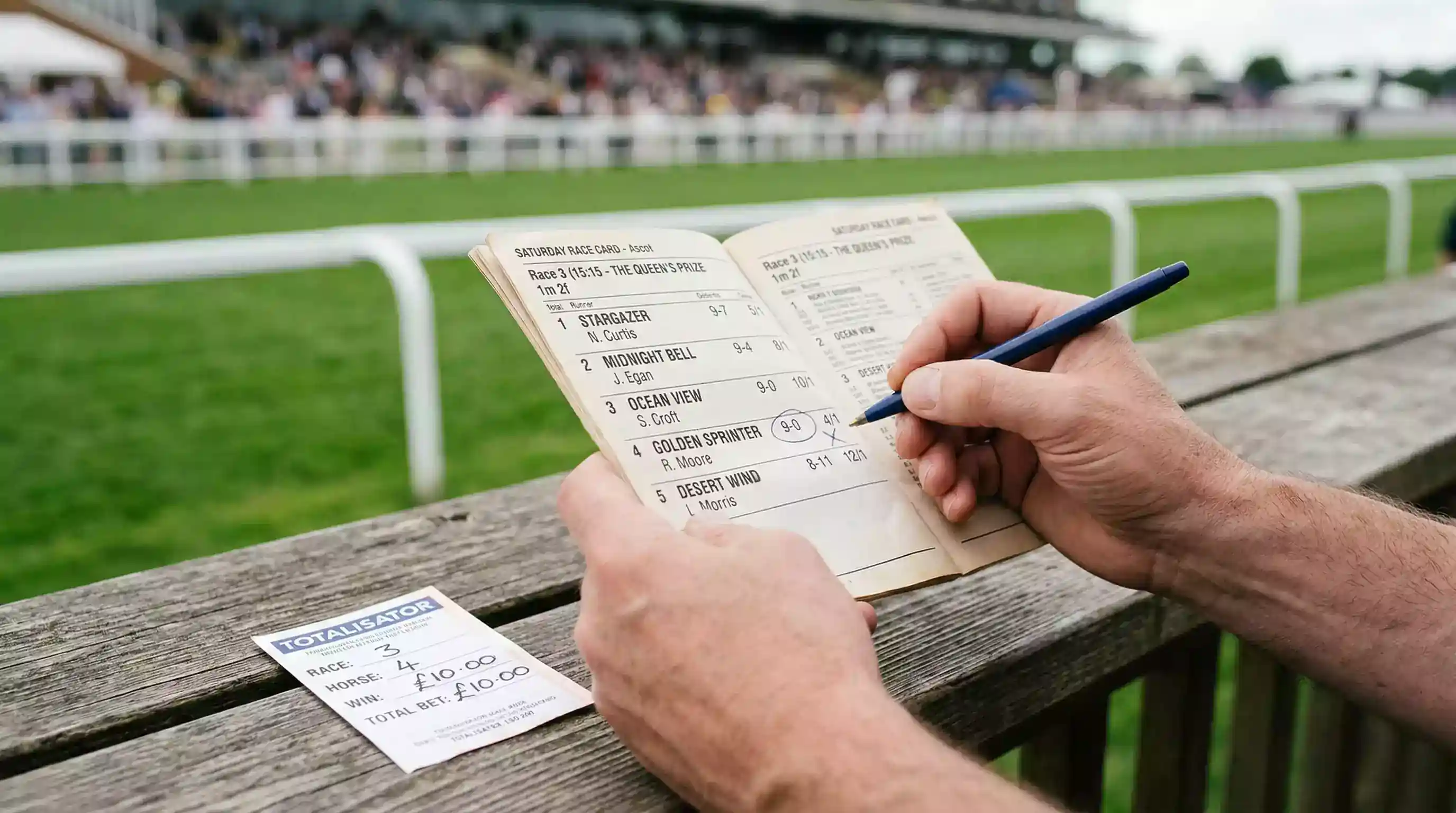
What makes the wheel structure distinct from simply placing multiple straight exotic bets is efficiency. If you wanted to back your key horse to win with every possible runner in second for a 12-runner Exacta, you’d need to write out 11 separate forecast slips. A wheel automates that into a single bet structure. And when you move into Trifecta and Superfecta territory, the manual alternative becomes physically impractical – a full trifecta wheel in a 12-runner race covers 110 combinations, and nobody wants to fill out 110 individual betting slips.
The efficiency of a wheel depends entirely on how you position your key horse – and that decision shapes everything from cost to strategic exposure.
The Key Horse: Anchor of Every Wheel
Every wheel bet starts with a decision that most punters rush through: which horse gets keyed, and in which position? I’ve watched people agonise over their fourth selection in a trifecta part wheel while treating the key as a formality. That’s backwards. The key horse is the single selection your entire ticket depends on – if it misses its assigned position, every combination on your slip is dead.
In a standard wheel, the key horse is fixed in first place. You’re saying: this horse wins, and I want coverage across every possible combination for the remaining places. But wheels aren’t limited to first position. A back wheel keys a horse in second or third – useful when you fancy a horse to place but can’t see it winning. I’ve used back wheels in National Hunt racing when a consistent jumper keeps finishing third behind faster rivals. You lock it into the third slot and wheel contenders through first and second.
Single key horse example – 10-runner Exacta
Key horse: #4, fixed in first place.
Remaining runners filling second place: 9 (all others).
Total combinations: 9.
At a £1 unit stake: 9 x £1 = £9 total cost.
The key decision isn’t just about confidence – it’s about cost control. Every horse you key is a horse removed from the combinatorial explosion in the other legs. In a multi-key wheel, fixing two horses (say, first and second) reduces the remaining combinations dramatically. For a 10-runner Trifecta with two keys, you’re looking at just 8 combinations instead of 72. That’s the leverage: strong opinions translate directly into lower ticket prices.
Full Wheel vs Part Wheel – When to Use Each
The choice between full and part wheel is really a question about how much you’re willing to pay for horses you don’t rate. A full wheel pairs your key horse with every other runner in the field – including the 33/1 outsider you’ve never heard of and the horse that hasn’t won in 18 months. A part wheel lets you select a subset of runners for the non-keyed positions, cutting combinations and cost at the expense of coverage.
Full Wheel
Covers every possible finishing combination around your key horse. Maximum coverage, maximum cost. Best when the race is genuinely open beyond your key selection – large-field handicaps where form is hard to separate are the classic full wheel scenario.
Part Wheel
Covers only selected runners in the non-keyed positions. Lower cost, targeted coverage. Best when you have opinions about multiple positions – conditions races with a clear shortlist of contenders suit part wheel construction.
I default to part wheels in about 70% of my exotic play. The reason is straightforward: in most races, I can eliminate at least three or four runners I genuinely don’t expect to hit the frame. Each elimination saves real money. In a 12-runner trifecta, dropping four runners from the non-keyed positions takes you from 110 combinations (full wheel) to 42 combinations (part wheel with 8 runners). At a £1 unit stake, that’s £68 saved – enough to fund part wheels on two more races.
The full wheel earns its place in specific conditions: Premier Flat fixtures with large competitive fields, big-field handicaps at the festivals, and any race where the form book gives you genuine conviction about one horse but honest uncertainty about the rest. If you find yourself building a part wheel that includes 80% of the field, just wheel the lot – the marginal cost of those last few inclusions rarely justifies the risk of missing the result.
Wheel Bet Cost Formulas for UK Racing
I once sat across from a fellow analyst who insisted that wheel bet pricing was “basically just multiplication.” He wasn’t wrong, technically. But that’s like saying flying a plane is basically just pointing it at the sky. The formulas themselves are simple permutation calculations – the challenge is understanding what each variable does to your ticket price when the field size moves by even one runner.
Every wheel bet formula rests on the same principle: you’re counting ordered arrangements (permutations), not unordered groups (combinations). Order matters because exotic bets demand correct finishing sequence. First and second is not the same as second and first. This distinction is why an Exacta wheel costs more than a Quinella covering the same horses – the Quinella doesn’t care about order, so it generates fewer combinations.
The UK Tote applies a 25% deduction to all exotic pools – Exacta, Trifecta and Superfecta. This deduction doesn’t affect your ticket cost (you pay the full price of your combinations), but it directly reduces the pool from which dividends are paid. I’ll cover the strategic implications of that deduction in the Tote takeout section below, but keep it in mind as we work through the formulas: every pound you spend on combinations is competing for a share of a pool that’s already 25% smaller than total contributions.
All formulas below assume a single key horse fixed in one position. For multi-key structures or back wheels, the combinatorial logic changes – see the relevant cluster articles for those variations.
Exacta (Forecast) Wheel Formula
The Exacta – known as the forecast in UK racing parlance – requires you to pick the first two finishers in exact order. When you wheel the Exacta, you fix your key horse in either first or second place and let the remaining runners fill the other slot.
Full Exacta wheel formula (key horse in first):
Combinations = n – 1
Where n = total runners in the race.
Total cost = (n – 1) x unit stake
Worked example: 10-runner race, key horse in first, £2 unit stake
Combinations = 10 – 1 = 9
Total cost = 9 x £2 = £18
You hold 9 separate forecast combinations, all with your key horse winning and each of the other 9 runners finishing second.
The formula is identical whether you key the horse on top (to win) or on the bottom (to finish second) – the number of combinations doesn’t change. What changes is the strategic logic: a top wheel says “this horse wins, anyone second”; a bottom wheel says “anyone wins, this horse runs second.” I find bottom wheels underused in UK racing, particularly with consistent place horses in small-field National Hunt races where a reliable second is easier to identify than the winner.
For a part Exacta wheel, the formula shrinks to the number of selected runners in the non-keyed position. If you key one horse on top and select 5 runners from a 12-runner field for the bottom slot, your cost is simply 5 x unit stake. The Exacta wheel calculator covers part wheel permutations in detail, including scenarios where you key multiple horses.
Trifecta (Tricast) Wheel Formula
The trifecta – or tricast, as UK punters and the Tote call it – is where wheel bet cost starts to bite. You’re picking the first three finishers in exact order, and the number of permutations grows far faster than most people expect.
Full Trifecta wheel formula (one key horse in first):
Combinations = (n – 1) x (n – 2)
Where n = total runners.
Total cost = (n – 1) x (n – 2) x unit stake
Worked example: 10-runner race, key horse in first, £1 unit stake
Combinations = (10 – 1) x (10 – 2) = 9 x 8 = 72
Total cost = 72 x £1 = £72
Compare this with the Exacta wheel on the same race: 9 combinations at £9. The jump from two-position to three-position exotics multiplied the cost by eight.
That escalation is the single most important thing to understand about trifecta wheels. With average Flat field sizes at 8.90 runners, a typical full trifecta wheel costs around £56 at a £1 unit. But the BHA’s 2025 Racing Report showed Premier Flat fixtures averaging 11.02 runners, and at that field size your cost leaps to 90 combinations. Add a few more for a big handicap with 16 declared runners and you’re looking at 210 combinations – £210 on a single race at £1 per combination.
This is why part trifecta wheels exist. By selecting a subset of runners for the second and third positions, you can cut the cost dramatically while still covering the combinations you consider most likely. The trifecta wheel cost calculator breaks this down with full and part wheel tables across every realistic field size.
If the trifecta cost escalation feels sharp, the superfecta takes it to another level entirely.
Superfecta Wheel Formula
The superfecta demands the first four finishers in exact order. Full wheels here get expensive fast, which is why most serious exotic bettors treat the superfecta as a part-wheel-only proposition.
Full Superfecta wheel formula (one key horse in first):
Combinations = (n – 1) x (n – 2) x (n – 3)
Where n = total runners.
Total cost = (n – 1) x (n – 2) x (n – 3) x unit stake
Worked example: 10-runner race, key horse in first, £1 unit stake
Combinations = 9 x 8 x 7 = 504
Total cost = 504 x £1 = £504
The same race that cost £9 as an Exacta wheel and £72 as a Trifecta wheel now runs £504 as a Superfecta full wheel. In a 14-runner handicap, the figure climbs to 1,716 combinations.
At these numbers, the full superfecta wheel is viable only in small fields or at tiny unit stakes. I’ve run full superfecta wheels profitably only in 8-runner races at £0.50 units – that’s 210 x £0.50 = £105, a realistic budget for a race where the superfecta dividend can stretch into the hundreds or even thousands. Beyond 10 runners, I switch exclusively to part wheels, keying two or even three horses and selecting a narrow band of contenders for the remaining positions. The superfecta wheel bet cost article walks through multi-key strategies that keep the ticket price under control.
Wheel Bet Cost Tables by Field Size
Numbers on a page do more than formulas in your head – at least that’s been my experience. I keep printed cost tables in my racing folder because mid-afternoon at the track is not the time to be multiplying permutations on a phone calculator. The tables below give you the full wheel cost for each exotic type across realistic UK field sizes, all at a £1 unit stake. For £2 units, double; for 50p units, halve.
| Runners | Exacta Wheel | Trifecta Wheel | Superfecta Wheel |
|---|---|---|---|
| 6 | £5 | £20 | £60 |
| 7 | £6 | £30 | £120 |
| 8 | £7 | £42 | £210 |
| 9 | £8 | £56 | £336 |
| 10 | £9 | £72 | £504 |
| 11 | £10 | £90 | £720 |
| 12 | £11 | £110 | £990 |
| 14 | £13 | £156 | £1,716 |
| 16 | £15 | £210 | £2,730 |
| 20 | £19 | £342 | £5,814 |
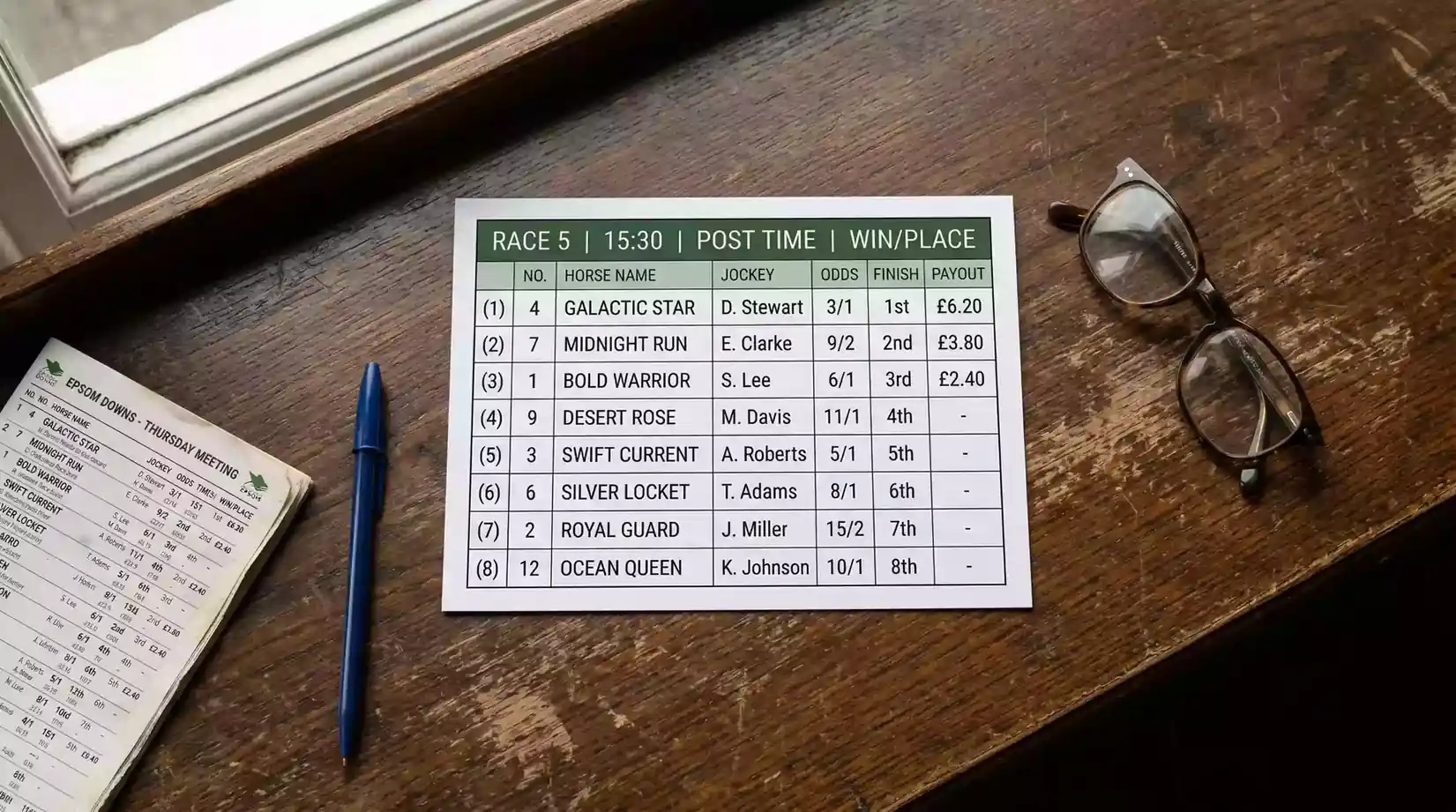
8.90
Average UK Flat field size in 2025 – roughly a £56 trifecta wheel
11.02
Average Premier Flat field size – roughly a £90 trifecta wheel
7.84
Average Jump field size – roughly a £42 trifecta wheel
Two patterns jump out from these tables. First, the Exacta column is gentle – linear growth, adding one combination per additional runner. You can wheel an Exacta in a 20-runner cavalry charge for £19, and that’s perfectly affordable. Second, the Trifecta and Superfecta columns accelerate violently. Each additional runner adds not one combination but an entire new layer of permutations. Between 10 and 12 runners, the trifecta wheel jumps by 38 combinations. Between 12 and 16, it jumps by another 100.
This non-linear scaling is why field size is the single biggest variable in wheel bet pricing. Not your unit stake, not the number of keys – the number of runners in the race. A punter who ignores field size when budgeting for exotic play will blow through their session bankroll by the third race.
Steve Whiteley turned a £2 Tote Jackpot stake into £1.45 million at Exeter in 2011 – the largest single Tote payout in UK racing history. The pool mechanics that created that dividend are the same permutation principles that govern every wheel bet cost on these tables.
The 8-12 Runner Value Zone
After years of tracking my own exotic bet returns, I’ve landed on a range that consistently delivers the best balance between ticket cost and potential dividend: 8 to 12 runners. Below 8, the pools tend to be thin and the dividends correspondingly modest – there simply aren’t enough combinations to generate the kind of outsider-driven payouts that make exotics worthwhile. Above 12, full wheel costs climb steeply enough that you’re either committing serious money or diluting your part wheel to the point where you’ve excluded genuine contenders.
Premier Flat fixtures averaged 11.02 runners per race in 2025, placing them squarely in the value zone. These meetings – Royal Ascot, the Guineas, York’s Ebor festival – combine large enough fields for meaningful dividends with deep enough pools to stabilise payouts. If you’re selective about when you deploy wheel bets, Premier fixtures are where the cost-to-dividend ratio works hardest.
The 8-12 range isn’t arbitrary. At 8 runners, a full trifecta wheel costs £42. At 12, it costs £110. That’s a range most session budgets can absorb across two or three target races. Meanwhile, the trifecta dividends in this field-size band regularly reach three figures because there are enough runners to generate surprise finishing orders without the pool being so fragmented that every combination pays poorly.
I treat the value zone as a filter, not a rule. If a 7-runner race has an obvious key horse and a generous pool from a televised meeting, I’ll wheel it. If a 14-runner handicap presents a standout key selection, I’ll build a part wheel. But when I’m scanning the card looking for where to allocate exotic budget, races with 8-12 declared runners get first consideration every time.
UK Tote Pool Deductions and Their Impact on Wheel Bets
Here’s a number that should be pinned above every exotic bettor’s desk: 25%. That’s what the UK Tote deducts from the Exacta, Trifecta and Superfecta pools before a single penny is distributed to winning ticket holders. One quarter of every pound staked in those pools disappears before the dividend is even calculated.
Deduction rates vary across Tote pool types. The Win pool carries a 16% commission – the lightest touch. Each-way and Place pools sit higher. But exotics all share that flat 25% rate, which is significant when you’re constructing wheel bets that cost £50, £100 or more per race. Your winning combination doesn’t return a share of the total pool – it returns a share of 75% of the total pool.
UK Tote pool deductions range from 16% on Win bets to as high as 28% on multi-race pools like the Jackpot. The 25% exotic rate sits toward the upper end of that spectrum but is applied uniformly across Exacta, Trifecta and Superfecta regardless of field size or pool volume.
Anne Lambert, then interim chair of the Horserace Betting Levy Board, flagged the pressure these economics create when she noted that turnover per race had declined by 8% year on year, with deeper drops against earlier benchmarks. Smaller pools magnify the takeout’s impact: in a thin domestic Trifecta pool, the 25% deduction can mean the difference between a dividend of £180 and £135 on the same result. That compression hits wheel bettors especially hard because their ticket costs are fixed regardless of pool size.
Tote Pool Betting
Fixed deduction percentage (25% on exotics). Dividend determined by pool size and number of winning units. Larger pools generally produce more stable dividends.
Fixed-Odds Bookmaker
Price set before the race via overround. No pool dependency – your payout is locked at the quoted odds. Bookmaker forecasts and tricasts use their own pricing model, not pool dividends.
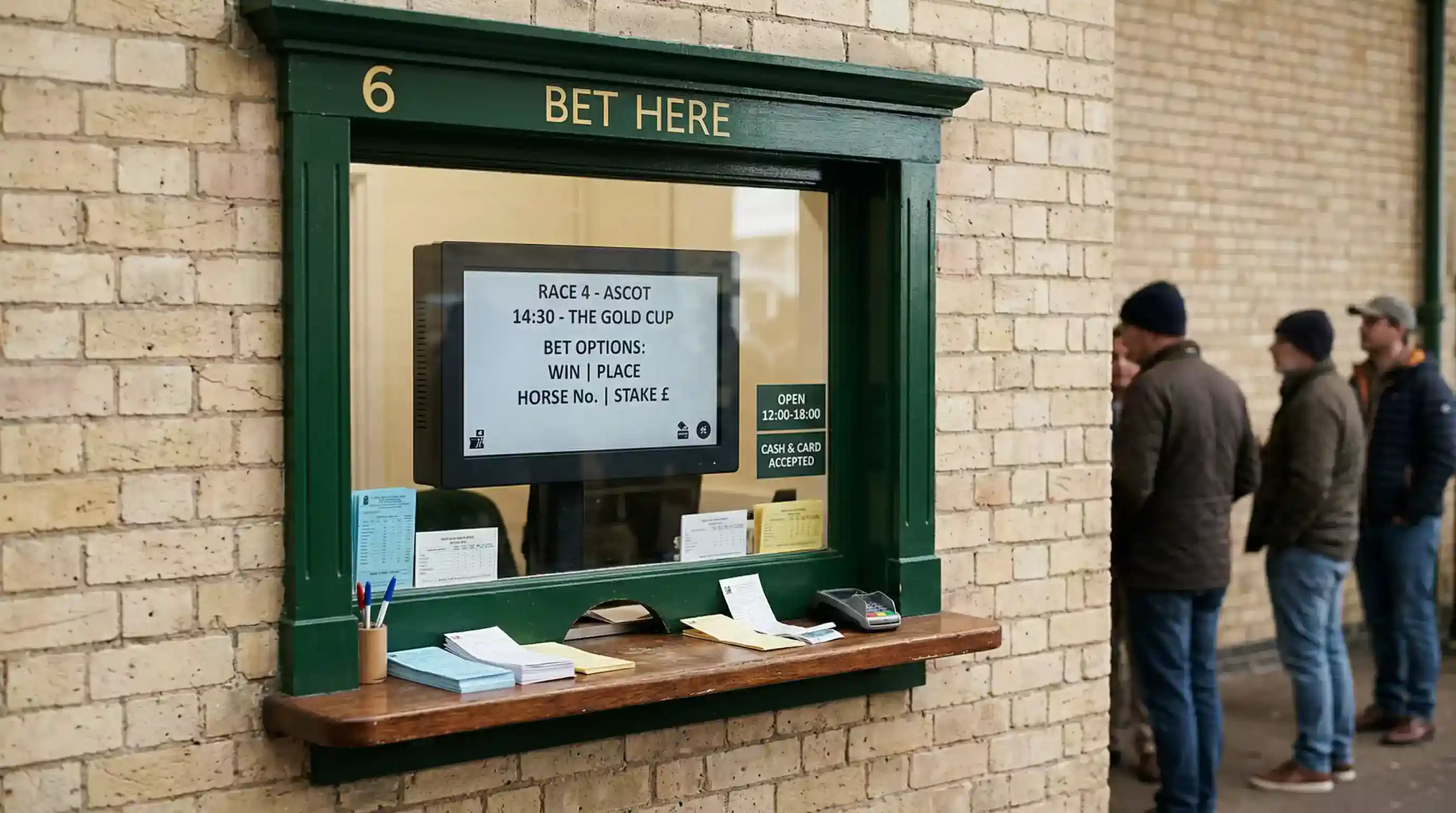
The practical takeaway for wheel bet construction: factor the 25% deduction into your expected return before committing to a full wheel. If your total ticket cost is £90 and the Trifecta pool is only £2,000, the net pool after deduction is £1,500. Even with a winning combination, the dividend from a £1,500 pool split among multiple winning unit holders may not cover the ticket investment. I look for races where the expected pool depth – driven by meeting profile, television coverage and field quality – makes the net pool large enough to justify the wheel cost. The full breakdown of every UK Tote pool deduction rate and dividend mechanics lives in its own article.
How Declining Field Sizes Affect Your Wheel Bet Cost
You’d think smaller fields would be good news for wheel bettors – fewer runners mean fewer combinations and cheaper tickets. And mechanically, that’s true. But the story playing out across British racing is more complicated than a simple cost reduction, because the same forces shrinking field sizes are also thinning the pools those cheaper tickets bet into.
The BHA’s 2025 Racing Report laid out the trajectory. Flat field sizes dropped from 9.14 to 8.90 runners year on year, but the sharper decline happened in National Hunt racing, where the average fell from 8.49 to 7.84 – a loss of more than half a runner per race in a single season. Behind these averages sits a deeper structural shift: UK horses in training fell 2.3% to 21,728 in 2025.
-0.24
Flat field size drop: 9.14 to 8.90 runners (2024 to 2025)
-0.65
Jump field size drop: 8.49 to 7.84 runners (2024 to 2025)
6-7%
BHA projected fixture reduction by 2027
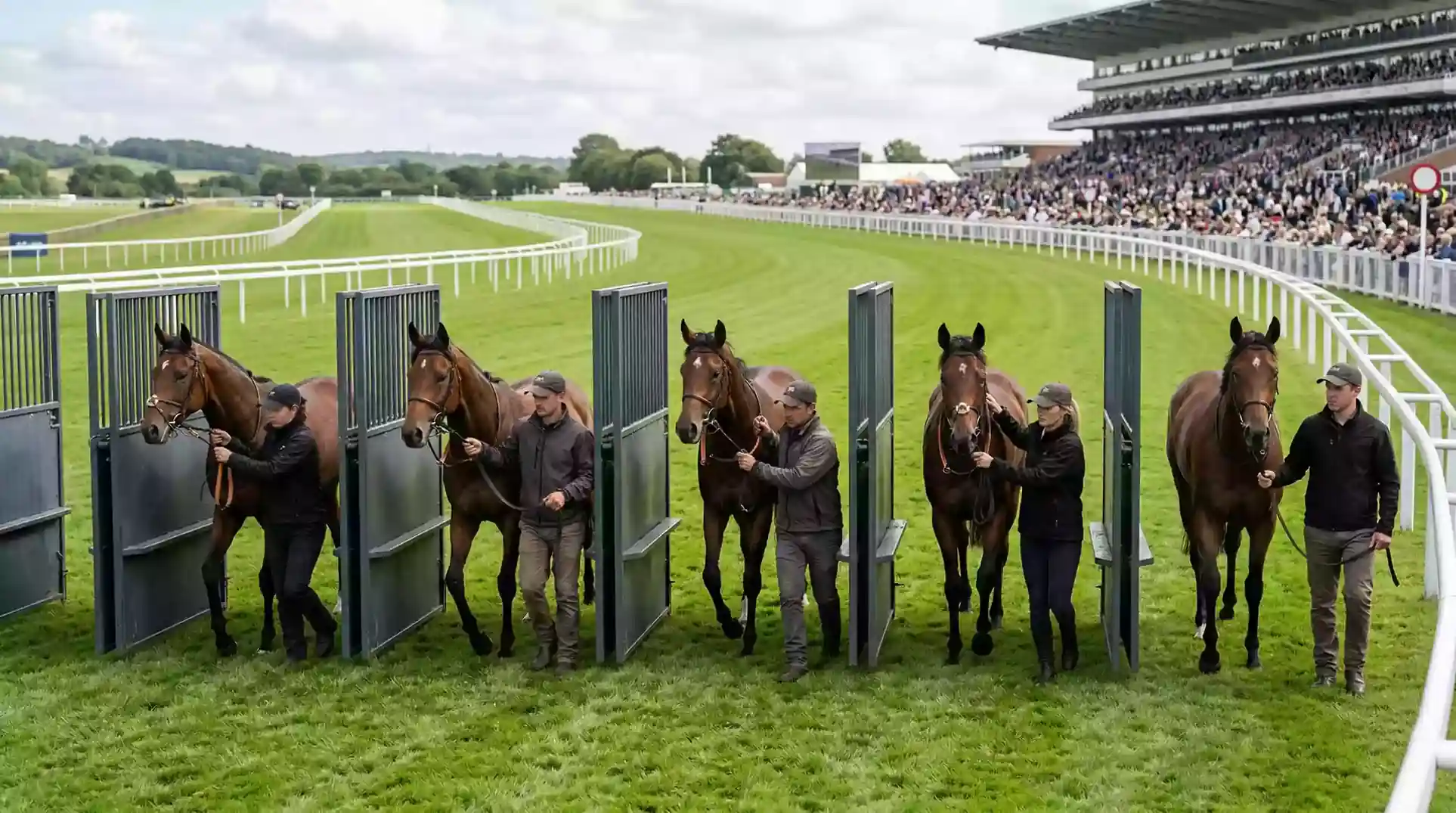
Richard Wayman, the BHA’s Director of Racing, was direct about the underlying cause: the horse population continues to decline and the betting environment remains challenging. Fewer horses in training means fewer entries per race, and BHA modelling projects a 6-7% reduction in total fixtures between 2024 and 2027.
For wheel bet pricing, this creates a dual-edged dynamic. On the cost side, smaller fields genuinely do reduce ticket prices. A trifecta wheel in an 8-runner race costs £42; at the old 2024 jump average of 8.49 runners (rounding to 9 runners for practical purposes), that was £56. The saving is real. But on the return side, smaller fields typically generate smaller pools, thinner dividends and less variation in finishing order – all of which reduce the expected payout from exotic bets.
The National Hunt decline is particularly relevant for wheel bettors. At 7.84 average runners, many jump races now sit below the threshold where Trifecta pools generate meaningful dividends. A 7-runner trifecta has only 30 permutations for the full wheel – tight enough that most outcomes are well-covered and dividends stay modest. The Jump code’s shrinking fields are pushing exotic value increasingly toward Flat racing and Premier fixtures.
What I’m watching closely is whether the BHA’s strategy to concentrate quality into fewer, larger fixtures – Wayman described the goal as making the best racing better and using that as a tool to grow interest – will offset the decline elsewhere. If Premier meetings sustain their 11-runner averages while core meetings get trimmed, the wheel bet value map shifts decisively toward a narrower set of high-profile fixtures.
Session Budgeting for Wheel Bets
I blew my entire Cheltenham budget on day one my second year working with exotic pools. Three trifecta full wheels on big-field handicaps, two superfecta part wheels that seemed reasonable at the time, and by 2pm I was watching the remaining four races with nothing left to bet. The mistakes were obvious in hindsight: no per-race cap, no session structure, no discipline. Since then, I’ve used a framework that’s kept exotic betting sustainable through hundreds of meetings.
The UK racing betting landscape makes discipline especially important right now. Overall betting turnover on British racing fell 4.3% in 2025 compared to the previous year and 10.7% against 2023. Average turnover per race dropped 5.6% year on year. These aren’t abstract industry metrics – they translate directly into thinner exotic pools, which means your wheel bets are competing for smaller dividend pots. Overcommitting to ticket costs against declining pools is the fastest way to grind down a racing bankroll.
Pre-race wheel bet checklist
- Check declared runners and confirm final field size after withdrawals
- Calculate full wheel cost at your unit stake using the formulas above
- If full wheel exceeds your per-race cap, build a part wheel or reduce unit stake
- Estimate the pool depth – televised races and Premier fixtures generate deeper pools
- Confirm the net cost fits within your remaining session budget
Do
- Set a fixed session budget before the first race and treat it as absolute
- Allocate no more than 25% of session budget to any single race
- Prefer part wheels and smaller unit stakes to full wheels at high unit stakes
- Target races where pool depth justifies the ticket cost
Don’t
- Chase losses by upgrading from part wheel to full wheel mid-session
- Ignore field size when setting your wheel structure – a “quick trifecta wheel” in a 16-runner race costs £210
- Treat exotic bets as a sideline that doesn’t count against your daily budget
- Assume declining turnover won’t affect the pools you’re betting into
My personal structure: I set a session budget, divide it by the number of races I plan to target (typically three or four across a card), and use that per-race allocation to determine whether I’m building a full wheel, a part wheel, or skipping the exotic entirely. If the per-race allocation doesn’t cover a meaningful wheel structure at my preferred unit stake, I don’t force the bet. Not every race deserves an exotic play, and the best wheel bettors I know are the ones comfortable sitting out most of the card.
Wheel Bet vs Box Bet: Cost and Strategy Compared
Every month I get messages from punters who treat “wheel” and “box” as interchangeable words. They’re not, and confusing them can cost you anything from a few pounds to several hundred, depending on the exotic type and field size. The distinction is structural: a wheel fixes at least one horse in a specific position; a box covers all possible finishing orders for a group of selected horses, with no fixed positions at all.
Wheel Bet
At least one horse locked into a specific finishing position (key horse). Remaining positions filled by other runners. Cheaper because fewer permutations are generated. Requires a strong positional opinion.
Box Bet
All selected horses can finish in any order across all positions. No fixed positions. More expensive because every possible arrangement is covered. Suits situations where you rate a group but can’t separate them by finishing position.

Cost comparison: 4 horses in a Trifecta
Box: 4 x 3 x 2 = 24 combinations x £1 = £24.
Wheel (1 key in first, 3 others filling 2nd and 3rd): 3 x 2 = 6 combinations x £1 = £6.
The box costs four times more because it covers every possible order among all four horses, including orders where your key horse doesn’t win.
The cost gap widens as you add runners. Box 5 horses in a trifecta and you’re at 60 combinations. Wheel one of those five as the key and fill the remaining legs with the other four, and you’re at 12 combinations. That 5:1 cost ratio is the price of not having a positional opinion.
So when does boxing make sense? Genuinely competitive short-field races where two or three horses are almost inseparable on form and any of them could win. I box trifectas at the Cheltenham Festival perhaps once or twice across the four days, usually in Grade 1 races where the top three in the market are separated by a length of form and picking a winner feels like guessing. Every other exotic play gets a wheel structure because I almost always have a stronger view on one horse than the rest.
The strategic takeaway: if you find yourself boxing regularly, you’re probably not doing enough race analysis. A box is an admission that you can’t distinguish finishing order, and in a game built on identifying edges, that admission should be rare. Wheels force you to take a position, and taking positions – even wrong ones – is how you develop the judgement that makes exotic betting profitable over time.
UK vs US Terminology: Forecast, Tricast and Their American Equivalents
I once tried to explain a combination tricast to an American handicapper at the Breeders’ Cup and it took five minutes before we realised we’d been talking about exactly the same bet the entire time. He called it a trifecta box. I called it a combination tricast. The mechanics were identical; only the vocabulary had caused the confusion.
This terminology gap matters because most online wheel bet calculators and educational content originate from the US. If you’re a UK punter researching wheel bet strategies, you’ll spend half your time mentally translating American terms into their British equivalents. Here’s the complete reference:
| UK Term | US Term | Definition |
|---|---|---|
| Forecast | Exacta / Perfecta | First two finishers in exact order |
| Tricast | Trifecta | First three finishers in exact order |
| Reverse Forecast | Quinella | First two finishers in any order |
| Combination Forecast | Exacta Box | Multiple selections covering all finishing orders for first and second |
| Combination Tricast | Trifecta Box | Multiple selections covering all finishing orders for first, second and third |
| Swinger (Tote) | Quinella | Two selections to finish in the first two places, any order (Tote-specific pool) |
| Tote | Pari-mutuel / Mutuels | Pool betting operator |
| Pool deduction | Takeout / Take | Commission percentage removed from the pool before dividend distribution |
Pari-mutuel – from the French “mutual stake,” the system where all bets on a race are pooled together, the operator deducts a commission, and the remainder is divided among holders of winning tickets. The UK Tote is Britain’s pari-mutuel operator; in the US, each racetrack operates its own pari-mutuel system.
The wheel bet concept itself translates directly – a wheel is a wheel in both jurisdictions. But the minimum stakes, deduction rates and pool structures differ. US tracks typically charge $2 minimums on exotic bets with takeout rates that vary by state and can reach 25-30% on superfectas. The UK Tote’s flat 25% exotic deduction is competitive by comparison, and minimum stakes are generally lower. For a detailed comparison of deduction rates across both systems, the UK vs US pool takeout analysis covers every relevant number.
When using American resources – calculators, strategy guides, forum discussions – keep the terminology table handy and remember that cost formulas are universal. Permutations don’t change based on what country you’re betting in. The maths is the same whether you call it a tricast or a trifecta.
Frequently Asked Questions
How much does a full trifecta wheel cost?
A full trifecta wheel with one key horse costs (n – 1) x (n – 2) x unit stake, where n is the total number of runners. In practical terms, at a £1 unit stake: an 8-runner race costs £42, a 10-runner race costs £72, a 12-runner race costs £110, and a 16-runner race costs £210. The cost scales steeply because each additional runner adds a new layer of three-position permutations, not just one extra combination.
What is the difference between a full wheel and a part wheel in horse racing?
A full wheel pairs your key horse with every other runner in the field for the remaining finishing positions. A part wheel pairs your key horse with only a selected subset of runners. The full wheel guarantees coverage of every possible finishing combination involving your key horse, but costs more. The part wheel is cheaper because you’re eliminating runners you consider unlikely to hit the relevant positions. The trade-off is simple: full coverage at full price, or targeted coverage at reduced cost. Most experienced exotic bettors default to part wheels because they can typically eliminate several runners on form, saving significant money without sacrificing the combinations most likely to win.
How do I calculate the cost of an exacta wheel bet?
For a full exacta wheel with one key horse, the formula is: (n – 1) x unit stake. If you key a horse to win in a 10-runner race at £2 per combination, the cost is 9 x £2 = £18. For a part exacta wheel, replace (n – 1) with the number of runners you’ve selected for the non-keyed position. If you select 5 runners for second place behind your key, the cost is 5 x £2 = £10.
What is the UK Tote takeout on exotic bets like the Trifecta?
The UK Tote deducts 25% from all exotic pools, including Exacta, Trifecta and Superfecta. This means that for every £100 staked into a Trifecta pool, £75 is available for distribution as dividends to winning ticket holders. The 25% covers operator costs, the Horserace Betting Levy and contributions to racecourses. The Tote works as a pari-mutuel system, so the dividend you receive depends on how many other punters hold winning tickets for the same combination – the 25% deduction is applied before that dividend calculation takes place.
How does field size affect wheel bet cost?
Field size drives wheel bet pricing more than any other factor. For Exacta wheels, each additional runner adds one combination – a linear increase. For Trifecta wheels, each additional runner adds an increasing number of combinations because the formula multiplies two variables that both grow with field size. Going from 10 to 12 runners in a trifecta wheel adds 38 combinations (£72 to £110 at £1 units). Going from 12 to 16 adds 100 more (£110 to £210). BHA data shows average UK Flat field sizes at 8.90 runners, with Premier fixtures at 11.02 and Jump racing at 7.84, so the discipline and meeting type significantly influence your expected wheel cost.
What is a key horse in a wheel bet?
The key horse is the selection you fix in a specific finishing position within your wheel bet. Every combination on your ticket includes this horse in its assigned slot. If you key a horse to win in a trifecta wheel, every combination has that horse finishing first, with different runners filling second and third. The key horse is your strongest conviction play – if it fails to finish in its keyed position, every combination on the ticket loses. You can key horses in any position (first, second, third, or fourth in a superfecta), and you can use multiple key horses to reduce the total number of combinations and lower ticket cost.
Is a wheel bet better value than a box bet?
Wheel bets are cheaper than box bets covering the same horses because wheels fix at least one horse in a specific position, reducing the number of permutations generated. A trifecta box of 4 horses costs 24 combinations; a trifecta wheel keying one of those 4 horses costs just 6 combinations. The wheel is better value when you have a strong positional opinion – typically, when you’re confident one particular horse wins but less certain about the minor placings. The box offers better coverage when you rate a group of horses equally and genuinely can’t separate them by finishing position, but this scenario is less common than most punters think.
Created by the ”Horse Racing Wheel bet Calculator” editorial team.